Dubai Telegraph - Ishiba's Plan to Change Power in Asia

EUR -
AED 4.308724
AFN 77.53857
ALL 96.624273
AMD 447.449324
ANG 2.100573
AOA 1075.861168
ARS 1684.86077
AUD 1.766091
AWG 2.111833
AZN 1.988896
BAM 1.954268
BBD 2.36005
BDT 143.197773
BGN 1.953631
BHD 0.441754
BIF 3463.356168
BMD 1.173241
BND 1.513301
BOB 8.096654
BRL 6.357821
BSD 1.171782
BTN 105.96795
BWP 15.525832
BYN 3.454393
BYR 22995.513884
BZD 2.356653
CAD 1.615218
CDF 2628.058653
CHF 0.934175
CLF 0.027299
CLP 1070.938431
CNY 8.276619
CNH 8.270131
COP 4461.223553
CRC 586.140628
CUC 1.173241
CUP 31.090873
CVE 110.17865
CZK 24.273936
DJF 208.666463
DKK 7.469236
DOP 74.491619
DZD 151.490982
EGP 55.654426
ERN 17.598608
ETB 183.089309
FJD 2.665371
FKP 0.877875
GBP 0.878183
GEL 3.177275
GGP 0.877875
GHS 13.451458
GIP 0.877875
GMD 85.646688
GNF 10190.926274
GTQ 8.974966
GYD 245.147872
HKD 9.130451
HNL 30.849822
HRK 7.534556
HTG 153.58832
HUF 384.730253
IDR 19546.304125
ILS 3.784774
IMP 0.877875
INR 106.419599
IQD 1534.996987
IRR 49419.822308
ISK 148.384759
JEP 0.877875
JMD 187.612963
JOD 0.831772
JPY 181.906836
KES 151.641831
KGS 102.599728
KHR 4691.283347
KMF 492.162008
KPW 1055.916087
KRW 1726.335387
KWD 0.359835
KYD 0.976535
KZT 611.12105
LAK 25403.09101
LBP 104931.962394
LKR 362.076232
LRD 206.817912
LSL 19.769406
LTL 3.464274
LVL 0.709681
LYD 6.365012
MAD 10.780151
MDL 19.808476
MGA 5190.931747
MKD 61.501538
MMK 2462.943764
MNT 4160.152767
MOP 9.396136
MRU 46.894248
MUR 53.910621
MVR 18.092247
MWK 2031.907547
MXN 21.128747
MYR 4.798387
MZN 74.982124
NAD 19.769406
NGN 1701.257622
NIO 43.125834
NOK 11.885683
NPR 169.54912
NZD 2.030334
OMR 0.449118
PAB 1.171782
PEN 3.945108
PGK 5.050998
PHP 69.34788
PKR 328.388334
PLN 4.222082
PYG 7870.831447
QAR 4.270553
RON 5.091161
RSD 117.287579
RUB 93.312766
RWF 1705.463389
SAR 4.402231
SBD 9.593296
SCR 17.555092
SDG 705.707555
SEK 10.878268
SGD 1.514266
SHP 0.880234
SLE 28.304461
SLL 24602.271054
SOS 668.4761
SRD 45.226102
STD 24283.709675
STN 24.480605
SVC 10.252965
SYP 12972.146962
SZL 19.762512
THB 36.923643
TJS 10.76856
TMT 4.118074
TND 3.425515
TOP 2.824882
TRY 50.099481
TTD 7.951768
TWD 36.702469
TZS 2903.770373
UAH 49.510497
UGX 4164.736
USD 1.173241
UYU 45.983961
UZS 14116.876116
VES 313.771147
VND 30873.23725
VUV 142.111846
WST 3.256309
XAF 655.443314
XAG 0.018645
XAU 0.00027
XCD 3.170741
XCG 2.111845
XDR 0.815161
XOF 655.443314
XPF 119.331742
YER 279.815677
ZAR 19.775323
ZMK 10560.576536
ZMW 27.038809
ZWL 377.782964
  • SCS

    0.0200

    16.14

    +0.12%

  • CMSD

    -0.1500

    23.25

    -0.65%

  • BCE

    0.3100

    23.71

    +1.31%

  • GSK

    -0.0700

    48.81

    -0.14%

  • NGG

    0.2400

    74.93

    +0.32%

  • BCC

    0.2500

    76.51

    +0.33%

  • CMSC

    -0.1300

    23.3

    -0.56%

  • JRI

    -0.0200

    13.7

    -0.15%

  • RBGPF

    0.0000

    81.17

    0%

  • AZN

    -0.4600

    89.83

    -0.51%

  • BTI

    -1.2700

    57.1

    -2.22%

  • RIO

    -1.0800

    75.66

    -1.43%

  • RYCEF

    -0.2500

    14.6

    -1.71%

  • RELX

    0.1000

    40.38

    +0.25%

  • BP

    -0.2700

    35.26

    -0.77%

  • VOD

    0.0500

    12.59

    +0.4%


Ishiba's Plan to Change Power in Asia


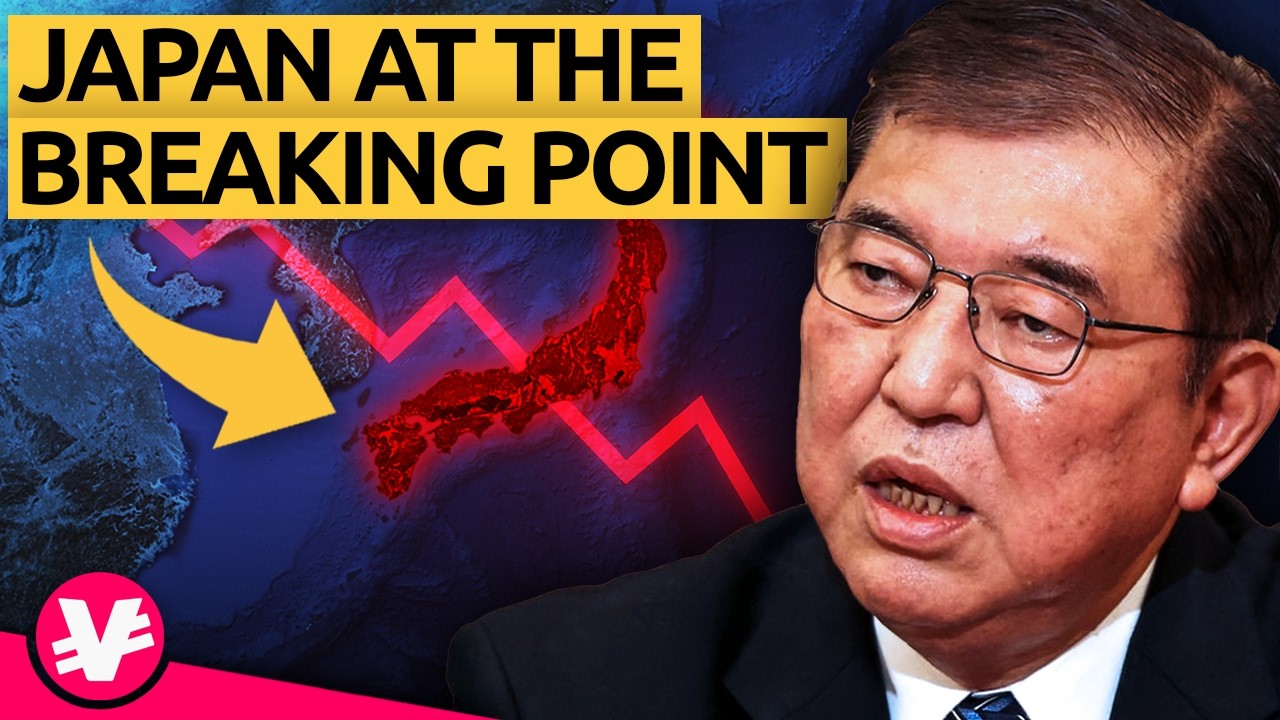
Is Japan Preparing for War? Ishiba's Vision to Redefine Power in Asia

In a world where geopolitical tensions are intensifying, Japan finds itself at a crossroads. At the centre of this discussion is Shigeru Ishiba, a prominent Japanese politician and former defence minister, whose bold proposals to reshape Japan's security policies are sparking widespread debate. Is Japan merely safeguarding its sovereignty, or is it actively preparing for conflict?
A Paradigm Shift in Japanese Defence

Since the end of World War II, Japan has adhered strictly to its pacifist constitution, particularly Article 9, which renounces the use of war as a means of settling international disputes. However, as global power dynamics evolve and regional threats grow, Ishiba and other leaders argue that Japan must modernise its approach to defence.

Ishiba has proposed a significant expansion of Japan’s military capabilities, including increased defence spending, the development of advanced technologies such as missile defence systems, and a shift towards a proactive deterrence strategy. These measures, he asserts, are necessary to counter the rising influence of China and North Korea's nuclear threat.

The Strategic Context: Asia in Flux
Japan’s strategic positioning in Asia has long been a delicate balancing act. With China's growing assertiveness in the South China Sea, Taiwan Strait, and East China Sea, Ishiba’s call for a stronger Japanese military aims to counterbalance Beijing’s influence. North Korea’s missile tests and unpredictable behaviour further exacerbate the urgency for a robust Japanese defence policy.

Ishiba’s proposals align with the broader trend of Indo-Pacific nations strengthening security alliances, including Japan's growing collaboration with the United States, Australia, and India under the Quadrilateral Security Dialogue (Quad). These partnerships are seen as essential to maintaining regional stability and ensuring a free and open Indo-Pacific.

Domestic and International Reactions
Domestically, Ishiba’s vision has faced both support and opposition. Proponents argue that his policies are pragmatic and essential for Japan’s survival in an increasingly volatile region. Critics, however, worry that such moves could escalate tensions and provoke adversaries. The debate also revives questions about the reinterpretation of Japan’s pacifist constitution and its implications for national identity.

On the international stage, Ishiba’s stance has drawn mixed reactions. Allies like the United States welcome Japan’s increased commitment to regional security, while China and North Korea view these developments as provocative and destabilising.

Preparing for Conflict or Preserving Peace?
Ishiba has repeatedly emphasised that his aim is not to prepare for war but to prevent it. He argues that a strong deterrent capability is the best way to avoid conflict and maintain peace in the region. However, critics contend that expanding Japan's military footprint could trigger an arms race and inadvertently increase the likelihood of confrontation.

The Road Ahead
As Japan navigates these turbulent waters, Ishiba’s vision represents a pivotal moment in the country’s post-war history. Whether his proposals will redefine Japan’s role in Asia or exacerbate regional tensions remains to be seen. What is certain, however, is that Japan’s future decisions will have profound implications not only for its own security but for the broader balance of power in Asia.

As the world watches, the question remains: Is Japan preparing for war, or is it merely adapting to a new era of uncertainty? In answering this question, the nation must grapple with the delicate balance between safeguarding its future and upholding the ideals that have defined its modern identity.


Featured


Marhabaan, welcome to the UAE and Dubai!

Marhabaan, welcome to the UAE and Dubai! The "skyward striving" Dubai next to ancient desert cities. Mysterious Bedouins and magnificent mosques exist peacefully alongside futuristic cities. Discover wadis and oases, golden sandy deserts, paradisiacal beaches and Arabian hospitality. The modern and the ancient Orient united in a book for dreaming.On this journey to Dubai and Abu Dhabi in the United Arab Emirates, the fairy tales of 1001 Arabian Nights meet the modern Arab world. These cascading cities enchant with their sky-high skyscrapers, fragrant souks, huge shopping centres and the ancient cultural heritage of the sheikhs.You can choose to stay in 4- or 5-star hotels with breakfast and swimming pools. You also have more options to book excursions so you can feel the magic of the East even more. If you want to do something out of the ordinary, you can spend an extra night in an enchanting hotel in the middle of the emirate's desert. Experience your own fairytale from 1001 nights and look forward to a holiday with plenty of casual extravagance in two superlative desert cities!

Trade and business at the Dubai Gold Souk

If Naif Deira is associated with a specific context, organization, or field, providing more details could help me offer more relevant information. Keep in mind that privacy considerations and ethical guidelines limit the amount of information available about private individuals, especially those who are not public figures. The Dubai Gold Souk is one of the most famous gold markets in the world and is located in the heart of Dubai's commercial business district in Deira. It's a traditional market where you can find a wide variety of gold, silver, and precious stone jewelry. The Gold Souk is known for its extensive selection of jewelry, including rings, bracelets, necklaces, and earrings, often crafted with intricate designs.Variety: The Gold Souk offers a vast array of jewelry designs, with a focus on gold. You can find items ranging from traditional to modern styles.Competitive Pricing: The market is known for its competitive pricing, and bargaining is a common practice. Prices are typically based on the weight of the gold and the craftsmanship involved.Gold and More: While gold is the primary focus, the souk also offers other precious metals such as silver and platinum, as well as a selection of gemstones.Cultural Experience: Visiting the Gold Souk provides not only a shopping experience but also a glimpse into the traditional trading culture of Dubai. The vibrant market is a popular destination for both tourists and locals.Security: The market is generally safe, and there are numerous shops with security measures in place. However, as with any crowded area, it's advisable to take standard precautions regarding personal belongings.Gold Souk is just one part of the larger Deira Souk complex, which also includes the Spice Souk and the Textile Souk. It's a must-visit for those interested in jewelry, and it reflects the rich cultural and trading history of Dubai.

Dubai: Amazing City Center, Night Walking Tour

During this excursion, we leisurely explore Dubai Downtown and Burj Khalifa in the evening, giving you the chance to witness the captivating transformation of the district as it comes alive with the vibrant glow of thousands of lights. As the sun sets, the illuminated facade of Burj Khalifa and the enchanting Dubai Fountain collaborate to produce a genuinely magical atmosphere.Dubai Downtown, also known as Downtown Dubai, is a distinguished and iconic district situated in the heart of Dubai, United Arab Emirates. It is a renowned neighborhood celebrated for its striking architecture, luxurious living, and exceptional entertainment options. At the core of Downtown Dubai stands the Burj Khalifa, a towering skyscraper that holds the title of the world's tallest man-made structure and serves as an emblem of modern Dubai.Burj Khalifa: The focal point of Downtown Dubai, Burj Khalifa, is famous for its groundbreaking height, reaching an impressive 828 meters (2,722 feet). Designed by architect Adrian Smith, its distinctive Y-shaped design encompasses a mix of residential, commercial, and hotel spaces.Dubai Mall: Adjacent to Burj Khalifa is the Dubai Mall, one of the largest shopping malls globally, featuring an extensive array of retail outlets, from high-end boutiques to international brands. The mall also provides various dining options, and entertainment attractions like an indoor ice rink and an aquarium, and hosts the mesmerizing Dubai Fountain.Dubai Fountain: Located just outside the Dubai Mall, the Dubai Fountain is a captivating attraction that presents a nightly spectacle of water, music, and light, captivating visitors with its perfectly synchronized performances.Emaar Boulevard: Stretching through Downtown Dubai, this boulevard is adorned with restaurants, cafes, and shops, making it a popular spot for leisurely strolls, dining, and people-watching.Luxury Living: Downtown Dubai boasts numerous upscale residential buildings and hotels, making it an appealing locale for those seeking a sophisticated urban lifestyle.Cultural Attractions: The Dubai Opera, an iconic cultural venue within the district, hosts a diverse range of performances, including opera, ballet, concerts, and theater productions.Transportation: Downtown Dubai is well-connected through public transportation, including the Dubai Metro, facilitating easy access to other parts of the city.In summary, Downtown Dubai is a dynamic and vibrant district that stands as a testament to Dubai's modernity and grandeur. It seamlessly combines architectural wonders with shopping, entertainment, and cultural offerings, creating a truly extraordinary destination.