
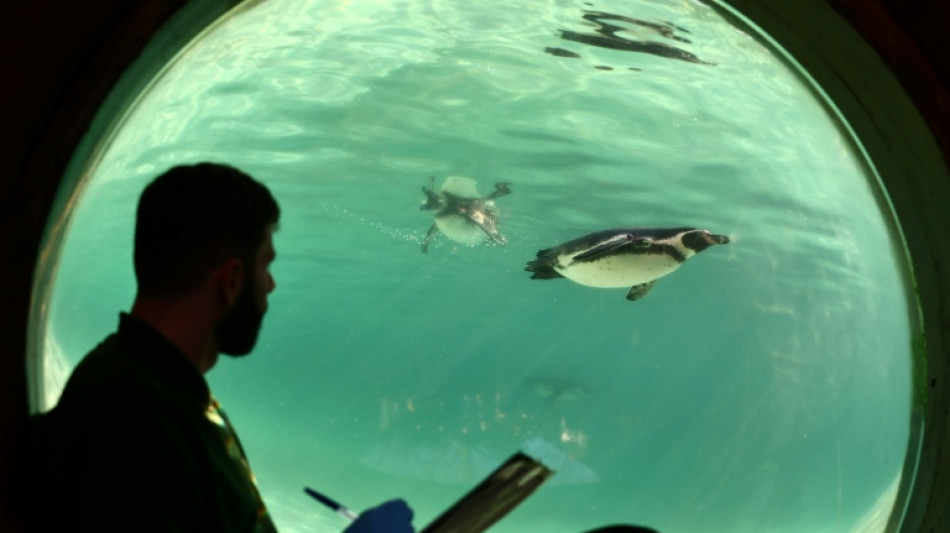
Breeding success: London zoo counts its animals one-by-one / Photo: HENRY NICHOLLS - AFP
With bunches of lettuce and bucketloads of nuts, London Zoo kicked off its annual animal count Friday, coaxing everything from goats to gorillas out of their enclosures for the celebrated stocktake.
The zoo, which is nearly two centuries old, performs the nearly week-long formal tallying early each January, with several new additions already proving to be the highlights.
"We've had some really successful breeding successes over the last year," animal operations manager Dan Simmonds told AFP, listing the 11 penguin chicks, three Asiatic lion cubs and two baby gorillas born in 2024.
The zoo also rescued from Chile 53 Darwin's frogs, which are among so-called Evolutionarily Distinct and Globally Endangered (EDGE) species, and bred a number of Socorro doves now extinct in the wild.
The keepers in the various enclosures will be kept "very busy" over the coming days as they count more than 10,000 animals from over 400 species, Simmonds noted.
"We've been on the go since before six o'clock this morning, and we'll be going through 'til the end of daylight today, and then repeating for quite a few more days, until we've completed the entire count," he said.
- Lemur yoga -
But with morning temperatures close to zero degrees Celsius (32 Fahrenheit) in mid-winter London, some inhabitants required a little more encouragement to emerge from their heated cabins.
The zoo's eight ring-tailed lemurs, endangered primates that hail from the dry forests and bushy scrubland of Madagascar, were especially shy at sunrise.
A couple eventually wandered over to an outdoor heat lamp, where they happily perched in unison in yoga-like poses. The rest of the Lemuridae huddled for warmth under heaters inside.
"The lemurs will sunbathe and do their famous yoga pose -- it enables them to get the sun rays into the core of their body," noted Simmonds.
Over at Gorilla Kingdom, there was no trouble luring the seven-strong troop of western lowland gorillas from their pens for visual confirmation of their numbers.
Its two newest members -- Juno and Venus, born in January and February last year -- hung on to their mothers as the troop scrambled out to grab an assortment of mixed vegetables.
"We're really excited about the baby gorillas," said Glynn Hennessy, the zoo's lead keeper of primates.
"It's been a long effort to get a male in, for him to have courtship with the females and then produce two offspring for us.
"And we're seeing their characters come through every single day," he added of Juno and Venus.
"They're very different, but it's wonderful to see the family group really having a few more members in it now."
Western lowland gorillas live in the tropical and swamp forests of west and central Africa, where their numbers are threatened by deforestation, hunting and disease.
- Memorising penguins -
Elsewhere at the zoo, the Humboldt penguins, which come from Peru and Chile, were busy swimming or basking in some morning sunshine as the count got underway.
In addition to the birth of 11 chicks last year, five new adults arrived from other European zoos, increasing the colony to 65.
Despite the large tally, their keepers can recognise them each individually, according to Simmonds.
"It's amazing -- I certainly couldn't do that," he added, noting each had a small bracelet as a back-up to identify them.
"Think Taylor Swift friendship bracelets type of thing, so if you really need to, or if you've forgotten, then you can refer to the chart and formally identify them.
"But keepers don't generally need to do that. They can just do it all from memory."
The zoo's diverse array of invertebrates must also be accounted for in the stocktake, a requirement of its zoological licence.
That includes a new thriving hive of honeybees -- happily counted as one to avoid trying to tally dozens of busy bees on the move.
Once complete, the count will be shared with other zoos worldwide -- via a database called ZIMS Species360 -- where it is used to help manage the global conservation breeding programmes for endangered animals.
I.Menon--DT


